
A multi-instrumentalist specializing in European and American folk, rock, blues, and choral music, I play guitar, bass guitar, bodhrán, tin whistle, ukulele, harmonica, spoons (yes, spoons), and basic piano. I frequently compose and arrange original music for projects I direct or perform in. Listen to some samples below!
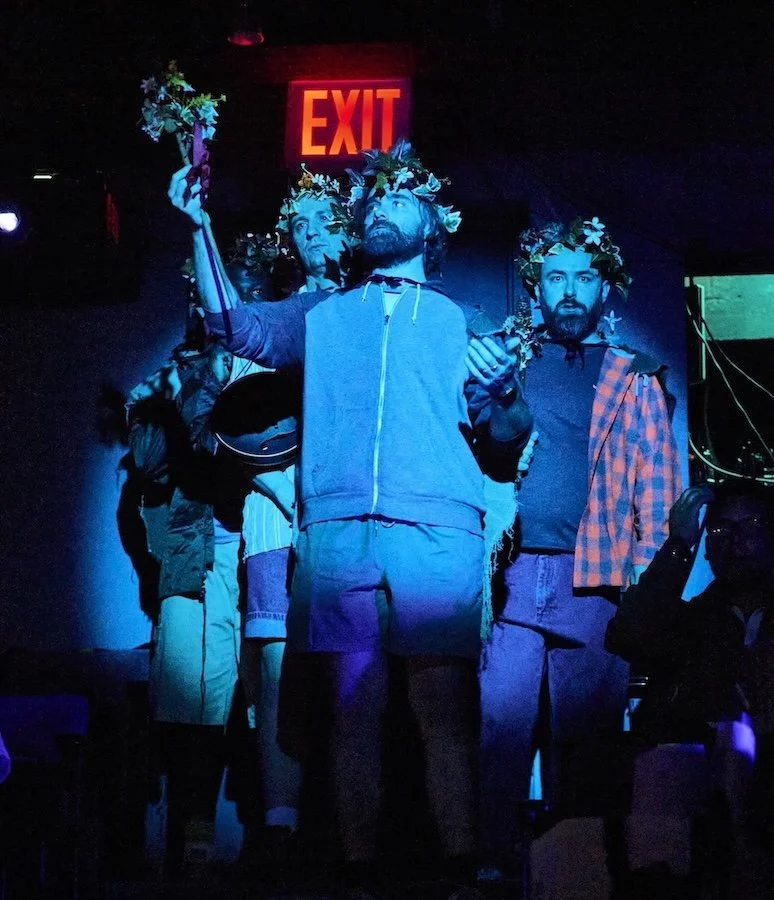
Eis Oros (To the Mountain) from The Maenads
Music by Keith Michael Pinault. Lyrics adapted from The Bakkhai by Euripides.
VOCALS: Laney Bodamer, Dana Diiorio, Ameya Kothandaraman, Midnight Schwab, Bela Valente.
In Stephen Foglia’s The Maenads, before the five men pretending to be Maenads enter the space, the ritual song of real Maenads can be heard in the distance on the mountain. But are they one and the same? Using traditional percussion instruments associated with the Maenads, and inspired by Petros Tabouris’ reconstructions of ancient Dionysian ritual music, I composed a brief chant to invoke the spirit of the Maenads.
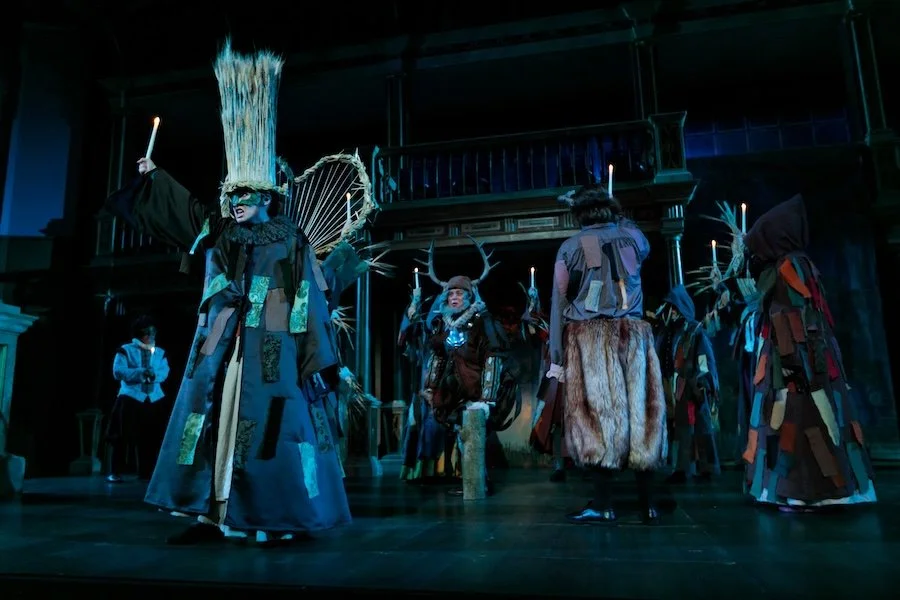
Faerie Masque from The Merry Wives of Windsor
Music: Traditional Welsh and English, arr. Keith Michael Pinault. Lyrics: Traditional Welsh/William Shakespeare
Directing a production of Shakespeare’s Merry Wives on a reconstruction of the Globe stage with Elizabethan-period costumes was an invitation to dive deep into the popular music of the time. For the faerie dance that the townsfolk put together to frighten Falstaff at the end of the play, I knew I wanted to arrange a spooky-sounding song for the ensemble to sing. In my research, I encountered a Welsh folk song called “Y Pren Ar y Bryn” (“The Tree on the Hill”), which is a cumulative song: each verse adds one more thing that is repeated each time through. (The Irish song “The Rattlin’ Bog,” which I grew up with, is similar.) I found this funny: Falstaff, in his ignorance, would be scared by a children’s rhyme, and the role of the Welsh parson Hugh Evans in setting up the prank made it all make sense. I arranged the song with a spooky intro and used the familiar tune “Greensleves,” which is mentioned in the play, for the faeries’ rhyme at the end.
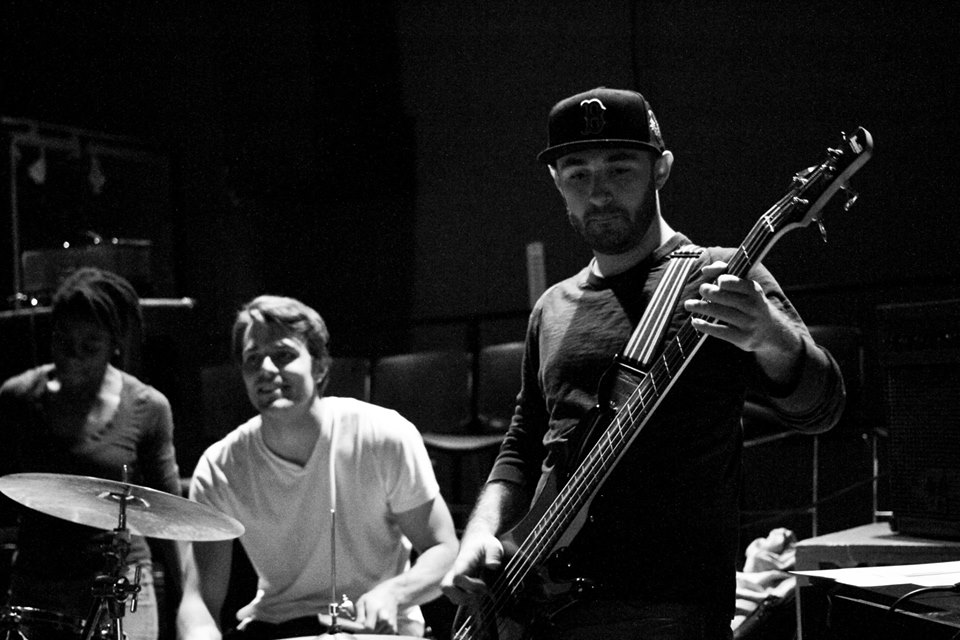
Photo by Brynne McManimie
Watch this space!